We had a vision test at school—a big board with rows of letters, just like this:
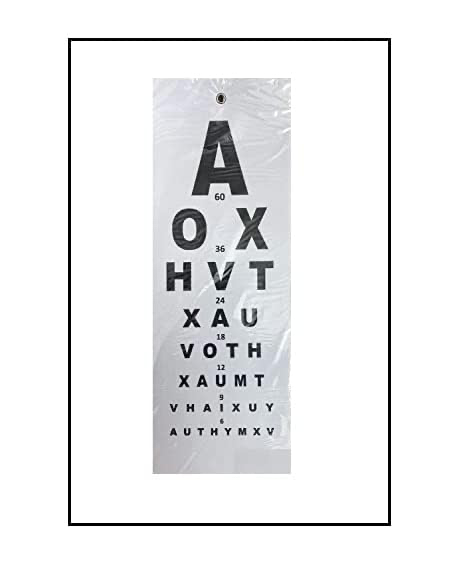
The nurse would cover one eye at a time and ask us to read the letters with the other eye. I read them quickly—even the tiny ones at the bottom. Then, feeling extra clever, I joked, “I can read them even if you cover both my eyes!”
Because the truth was, I wasn’t using my eyes. I had memorized the letters from previous tests. It felt like I had found a shortcut. A loophole. I wasn’t actually testing my vision—I was just beating the test. At the time, I thought I was being smart. But looking back, I realize I was completely missing the point.
The purpose of the test wasn’t to check my memory. It was to check my vision.
The Two Ways to Approach a Test
There are two ways to approach a test:
- Work with the test. If it’s a vision test, actually try to read the letters.
- Hack through the test. Find a way to “game” it—like using memory instead of eyesight.
On the surface, both approaches look the same. To a by-stander, it would just be a kid saying some letters. Whether the kid is truly reading the letters or reciting them from memory wouldn’t be evident. But, I’m sure you can appreciate, the two approaches are significantly different.
- One measures the skills the test was designed for.
- The other just tricks the system—without actually measuring the skills.
And here’s the thing: many tests can be hacked.
In school, I hacked my way through a lot of tests. During my 10th board exams, I didn’t study to understand. I studied to predict the exam. We used to get these booklets with past 10-years papers. I rummaged through them looked for patterns, trying to guess which questions would be asked, and memorizing answers.
Did it help me score well? To quite an extent, yes.
Did I actually learn anything worthwhile during those days? Nope.
Now, I’m not here to give you a moral lecture.
But, what if a test is so well-designed that hacks don't work?
When Hacking No Longer Works
Imagine if, instead of a static vision chart, the letters changed every time someone took the test. My memorization trick would be useless. I could try to find another hack—maybe look for patterns in the letter changes.
Or … I could simply do what the test actually asks of me: focus and read the letters.
The GMAT is that kind of a test. Shortcuts and gimmicks don’t work here.
That’s why the best way to improve is simpler than most people think.
(Mind you, I said simpler, not easier.)
✔️ Understand what the GMAT actually tests.
✔️ Get better at those skills.
✔️ The score will follow.
Perhaps the biggest reason many GMAT takers stop improving beyond a point is that they continue to try to hack through the test.
GMAT is a well-designed test. Hacks don’t work here. It tests understanding at a fundamental level. So, how to ace a test in which hacks don’t work? Let’s start with understanding what the GMAT tests.
So what is the GMAT actually testing?
- Why do business schools even ask for a GMAT score? Is it just a money-making scheme?
- Is it a test of Math and English? If so, why not just look at our school marks in these subjects?
- Sure, different education boards have different grading systems. But is the GMAT really the simplest way to standardize that?
- And even if standardization was the goal—why do B-schools even care about Math and English skills in the first place?
- If these subjects were so critical, shouldn’t literature and math majors have a massive advantage?
They don’t.
Because the GMAT isn’t a Math and English test. It is not testing us on English and Maths. It is testing us THROUGH English and Maths. To me it is evident that the GMAT is a test of skills that business schools believe their students need.
Some skills I believe the GMAT tests are:
- Reading skills – Can you process complex information clearly?
- Reasoning skills – Can you break down arguments and spot flaws?
- Critical thinking – Can you go beyond surface-level understanding?
- Mathematical + Practical Logic
- Ability to relate things with day-to-day life – Can you answer quant questions not with formulae, but with real-world understanding?
- Ability to organize and structure information – Can you deal with complexity in a structured way?
- Ability to operate systematically – Can you follow a process instead of jumping to conclusions?
No B-school asks, “How fast can you run a kilometer?” because that’s not relevant to an MBA. The GMAT, however, is testing something that is relevant. And here’s the thing: if you focus on these skills, your score will take care of itself.
Try this: Pick one GMAT question today and before solving it, ask yourself:
- What skills is this question testing? (Reading, reasoning, structuring information?)
- How would a smart individual who is very logical but perhaps doesn’t remember the concepts we learned in school approach this question?
Prepare With the Flow, and the Score Will Follow
At its core, the GMAT is a skills test—not a Math test, not an English test, and definitely not a memory test.
If you approach it like a game to “crack” with hacks and shortcuts, you’re missing the point—just like I did with my vision test in school. And the GMAT is much smarter (or more attentive) than the lady who administered the vision test. So, sneaking by is highly unlikely. Instead, prepare with the flow of the test, not against it.
When you prepare with the test, instead of against it, things become simpler. You stop fighting the test and start working on improving at the things it actually values.
Some examples:
❌ Hack: “The first 5-6 questions are the most important! If I get those right, I’ll get a great score.”
But… is that how the algorithm really works?
✅ Simpler approach: Let the test-makers do their job. I’ll do mine—focus on understanding and answering each question to the best of my ability. The rest is just noise.
❌ Hack: “In CR, options with extreme language are always wrong.”
But… is that true? Is it always the case? If not, how do I know when this ‘rule’ actually applies?
✅ Simpler approach: Instead of relying on rigid shortcuts, understand why certain answer choices are wrong. If extreme options are often incorrect, what’s the underlying reason? Are those reasons applicable in this particular case?
❌ Hack: “In RC, Just read the first and last sentence of each paragraph.”
❌ Hack: “Focus mainly on contrast words and opinions.”
✅ Simpler approach: The section is called Reading Comprehension. So, read in a way that enables you to truly comprehend.
Challenge: For the next 3 days, whenever you do an RC or CR question, ask why each incorrect answer is wrong. Do not compare the answer choices. Evaluate each one in isolation, take a call whether you think it is right or wrong and then move on.
Reflection. Ask yourself: Am I trying to truly improve my thinking, or am I just trying to ‘beat’ the test? What should I change?
How this newsletter can help you
The purpose of this newsletter is simple: to support you on your GMAT journey. Here’s how:
- Mindset: Developing the right attitude for success.
- Debunking myths: Challenging common misconceptions about GMAT prep.
- Understanding the process: Breaking down the test into manageable steps.
- Psychology: Managing test anxiety and staying calm under pressure.
This isn’t just about tips and tricks. It’s about thinking differently—so that you don’t try to ‘power through’ your GMAT journey; you start to enjoy it.
Because when you stop ‘fighting’ the test, and start preparing in a way that aligns with the purpose of the GMAT, you’ll start seeing improvement en route. You’ll value clarity even before accuracy. You’ll start enjoying the journey.
Subscribe to the newsletter
Thanks for this!
You’re welcome.